Sewage Backup Cleanup in Rochester, NY
This is the one water category where the advice is simple: stop reading and call.
A sewage backup is Category 3 — black water — and it carries bacteria, viruses, and parasites. It's a health hazard, not a mop job, and everything porous it touched has to come out. This page explains what sewage cleanup costs in Rochester, why the containment protocol isn't optional, and what to do to keep your household safe until help arrives.
What sewage cleanup actually involves
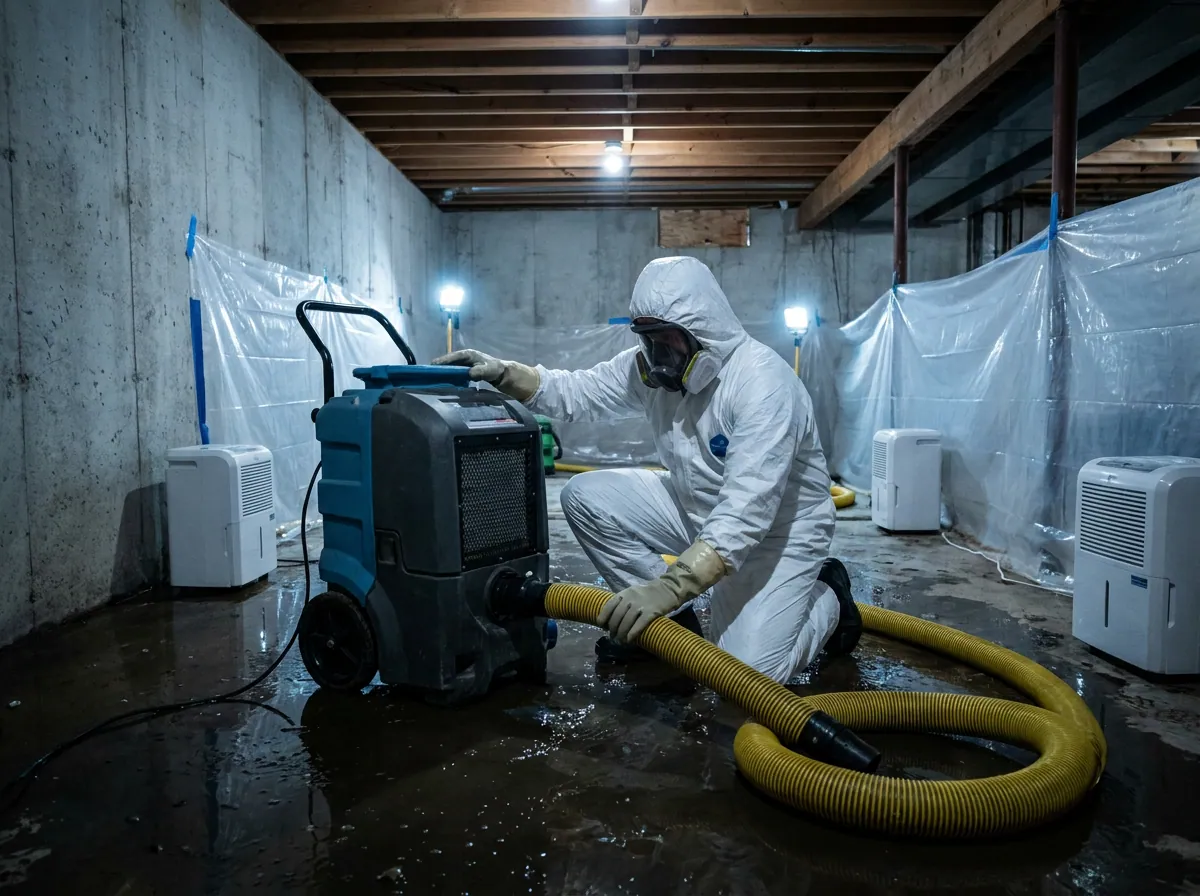
Sewage cleanup is a different job from every other kind of water damage, and the reason is the water itself. Category 3 water — sewage, or floodwater that carries it — is contaminated with pathogens, and that changes the rules. Anything porous that it touched is treated as unsalvageable: carpet, pad, drywall below the waterline, insulation, particleboard. It doesn't get dried and saved; it gets removed and disposed of safely.
Everything happens inside a containment protocol. The affected area is sealed off so contamination doesn't spread through the house, crews work in protective equipment, and hard surfaces are disinfected — not just wiped. Then, and only then, does the structure get dried like any other job. That protocol is the single biggest reason a sewage job costs more than a clean-water job of the same size.
Contain & extract
Seal off the area, remove standing contaminated water, and keep the pathogens from spreading through the home.
Remove & disinfect
Porous materials come out and are disposed of safely; hard surfaces are cleaned and disinfected. This is where the cost lives.
Dry & verify
Structural drying to target moisture, then confirmation the area is clean and safe before rebuild.
What sewage cleanup costs in Rochester
These are our usual market ranges for jobs like yours in Rochester — not a quote, and not a fixed price. Fixed price is set when we see your situation in person.
| Situation | Typical Rochester range | What moves it |
|---|---|---|
| Small backup, hard floor, caught fast | $2,500 – $6,000 | Area, how long it sat |
| Finished basement, sewage-soaked | $5,000 – $15,000 | Carpet, drywall & pad removal |
| Extensive / multiple areas | $12,000 – $30,000 | Volume of porous material out |
| Sewer line repair (licensed plumber) | $300 – $4,000+ | Cause — clog vs. collapsed line |
Three things move the number, in order:
- How much porous material it touched. With Category 3 water, carpet, pad, drywall, and insulation don't dry — they come out. The more finished the space, the more there is to remove and dispose of.
- The containment protocol. Sealing off, protective equipment, disinfection, and safe disposal are non-negotiable for black water. That's fixed overhead a clean-water job simply doesn't carry.
- Time. The longer sewage sits, the further contamination spreads and the more material has to be pulled — so this is the job where the delay before calling costs the most.
The drying half of the bill is still set by equipment-days. Once the contaminated material is out and the area's disinfected, air movers and dehumidifiers dry the structure and bill per unit, per day. Here's how equipment-day billing works.
Why Rochester basements back up
Aging municipal infrastructure is the backdrop. Parts of Rochester's sewer system are old, and in older neighborhoods a heavy rain can overwhelm the mains and push water back up the lowest drain in the house — usually a basement floor drain or a laundry standpipe. When the street can't take the water, your basement becomes the overflow.
Tree roots in the lateral are the slow-building version. Rochester's mature, tree-lined streets mean roots work into the clay sewer lines connecting older homes to the main, narrowing them until one bad flush or storm backs the whole line up into the basement.
A sewage backup that fills a basement looks like a flooded basement — but the Category 3 water makes it a different, more serious job. And whatever the source, if contaminated material is left too long, the next problem is mold. When the cause is a failed pipe rather than the sewer, it's a burst-pipe cleanup instead.
Sewage backup FAQs
How much does sewage cleanup cost in Rochester?
Most Rochester sewage-backup jobs land between $2,500 and $30,000. A small backup on a hard concrete floor, caught fast, is the low end. A finished basement where sewage soaked carpet, pad, and drywall is the high end, because Category 3 water means the porous materials come out, not dry. The containment protocol is what separates it from a clean-water job on price.
Is a sewage backup dangerous?
Yes. Sewage is Category 3 — black water — and carries bacteria, viruses, and parasites. It is a genuine health hazard, not just a mess. Keep people and pets out of the affected area, don't track it through the house, and don't try to clean it with household equipment. This is the water category where the advice is to stop reading and call.
Can I clean up sewage myself?
It isn't advisable. Category 3 water needs containment, personal protective equipment, disinfection, and the removal and safe disposal of anything porous it touched. Household cleaning doesn't make a surface safe again, and disturbing contaminated material spreads the contamination. The risk isn't the water you can see — it's the pathogens it leaves behind.
Does insurance cover sewage backup in New York?
Standard homeowner's policies often exclude sewer and drain backup unless you carry a specific water-backup endorsement, which many New York homeowners add for exactly this. Coverage varies, so check your policy. Either way, photograph everything before cleanup starts, because that documentation is what the claim turns on.
How long does sewage cleanup take?
Extraction and removal of contaminated materials is usually the first day. Disinfection and structural drying with air movers and dehumidifiers typically runs 3 to 5 days after that, until moisture readings hit target and the area verifies clean. Because the drying equipment bills per unit per day, that's the line item most worth asking about. Call (866) 332-0750 for a real range.
Get help with a sewage backup
Call and describe what you're looking at — where it backed up, roughly how much floor is affected, and whether the space is finished. Keep everyone out of the area until then. We cover Rochester and every Monroe County town, around the clock.
- (866) 332-0750
Fastest — 24/7, no obligation - Rochester, NY